
Wild Horses Rescued After Snowstorm Near Mammoth Lakes
Summary:
This story documents the emergency rescue of Eastern Sierra wild horses trapped in deep snow near Mammoth Lakes, California, along the Highway 395 corridor. After being stranded since the December storms with little to no access to food or water, 24 horses were removed in a Forest Service operation. The surviving 20 were transported to the Double Devil Wild Horse Corrals in Alturas, California, where they are now recovering with rehabilitation expected to take up to 10 months. The rescue, later covered by the Los Angeles Times, highlights both the importance of transparency in wild horse management and the deep connection many locals feel toward the Mono County and Mono Lake horse herds.
Wild Horses Rescued After Being Trapped in the Snow Near Mammoth Lakes
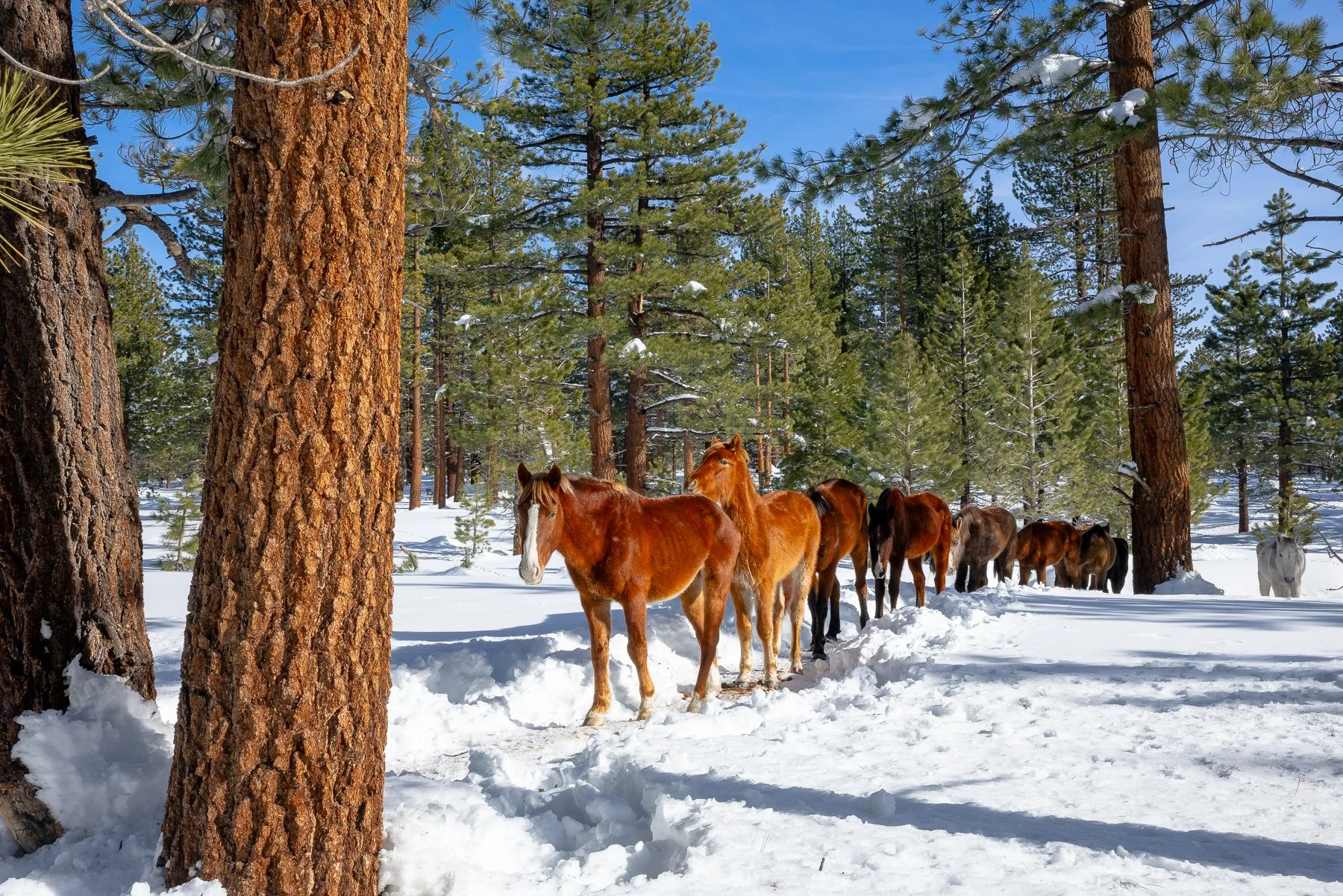
In mid-January, another Mammoth Lakes business owner told me he had seen wild horses in deep snow while snowmobiling the day before and asked if I could come out to assess what he’d found. We returned together the next day. What we found was far worse than expected: a family group trapped in deep snow, unable to access food or water. Based on the storm cycle, their tracks, and their condition, they had been stranded since the December storms, meaning the horses had gone two to three weeks without food or water. They were confined to a small packed-down area, surrounded by the deepest snowpack along the Highway 395 corridor.
I documented what I saw and we immediately called it in. In the days that followed, I worked to reach the right people and get clear updates. I also spoke directly with trusted voices well known in the conservation community as the situation unfolded. Wild horses exist in a complicated legal category, and that reality makes emergency response far more difficult than most people realize. Locally, it was far harder to get timely communication from the agencies responsible for the response, and I wasn’t getting consistent answers. Nothing had happened on the ground, and that’s why I chose to share what I found publicly. At that point, the horses’ wellbeing had to come first.
The Forest Service rescued 24 horses and brought them to a holding facility in Bishop where one horse died from extreme emaciation and three were euthanized due to critically poor body condition. The surviving 20 were then swiftly transported eight hours to the Double Devil Wild Horse Corrals in Alturas, California, where they are now recovering, a move that appeared to be accelerated due to the public scrutiny and pressure unfolding locally.
The Forest Service claims that six additional horses were found dead in the field. Though in reality, when they got involved, only two were found deceased, one being a foal. The Forest Service has not acknowledged that detail publicly, but the remaining deaths occurred during the period they were actively managing the situation and/or pushing the horses out of the area.
A cat track had to be plowed for several days just to give the horses a path out and a way to be pushed toward the bait trap.
I am thankful the surviving horses are now in a safe place with people who appear committed to their care during recovery. While the overall outcome is a positive one, there were losses, and those losses carry weight for me. Some of the horses lost meant something personal to me, and their loss is felt.
Getting them out was a monumental task, and I do want to acknowledge and thank the people who worked to make that rescue happen.
This was the first roundup of our local horses on public land here in California, something that has been argued and fought fiercely to prevent in the past. The horses needed emergency intervention. These horses matter deeply to a lot of people in the Eastern Sierra.
During the response, the public was intentionally shut out, questions went unanswered, and the communication that did come out was inconsistent. In my direct interactions, I was told things in person that very quickly did not match what was happening, which made the emergency roundup difficult to trust, even coming from the person who called and initially had full faith in them when they finally arrived to help.
I also want to acknowledge that there were individuals involved who helped save these horses. At the same time, there are significant local issues within the Forest Service here, involving people who live and work in our own community, who did not act with the transparency and compassion this situation deserved.
If you would like to read more about the rescue, the Los Angeles Times covered the story here:
[Link to LA Times article]
Thank you to everyone who cared along the way.
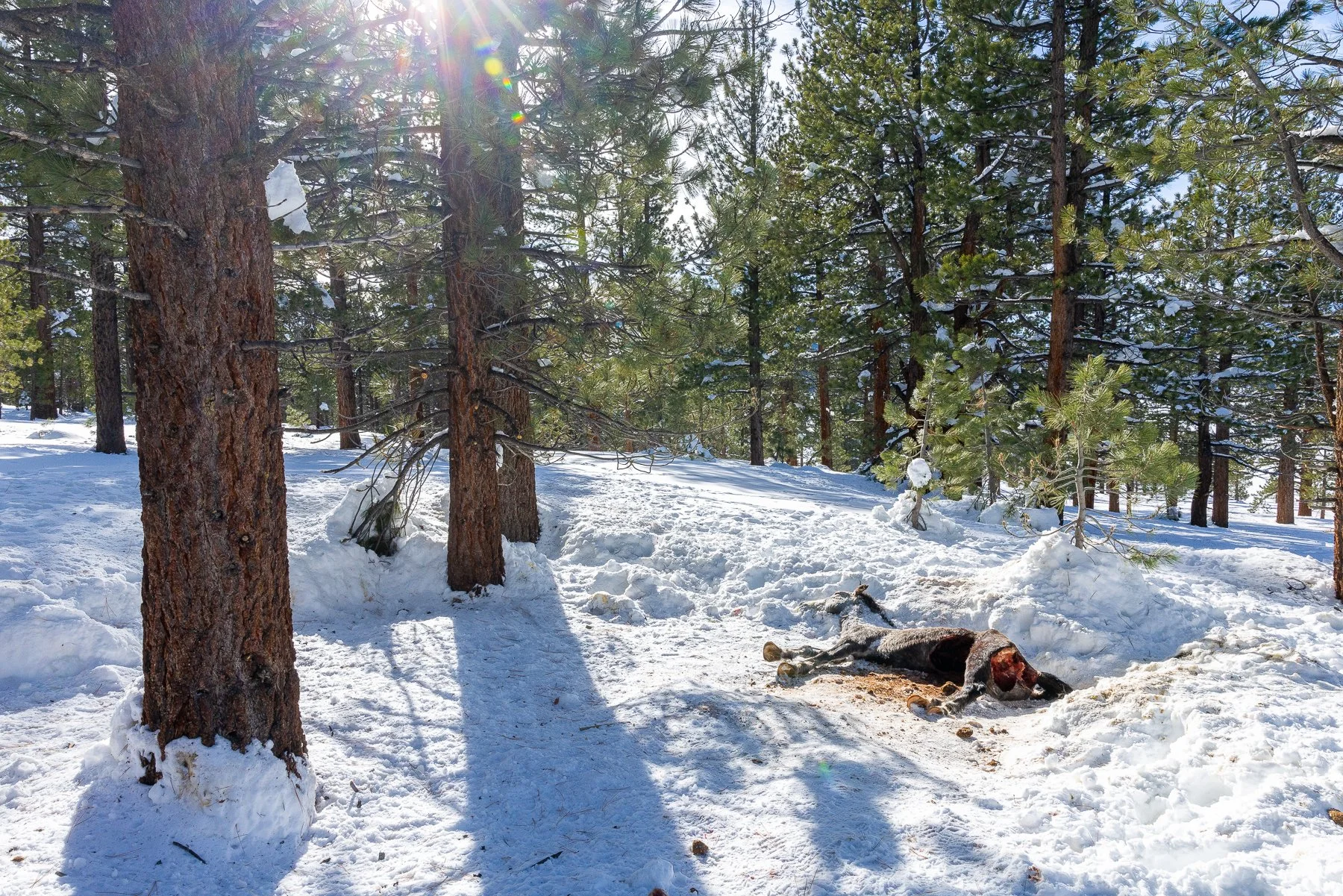
One of only two horses found deceased before Forest Service involvement, the other being a foal.
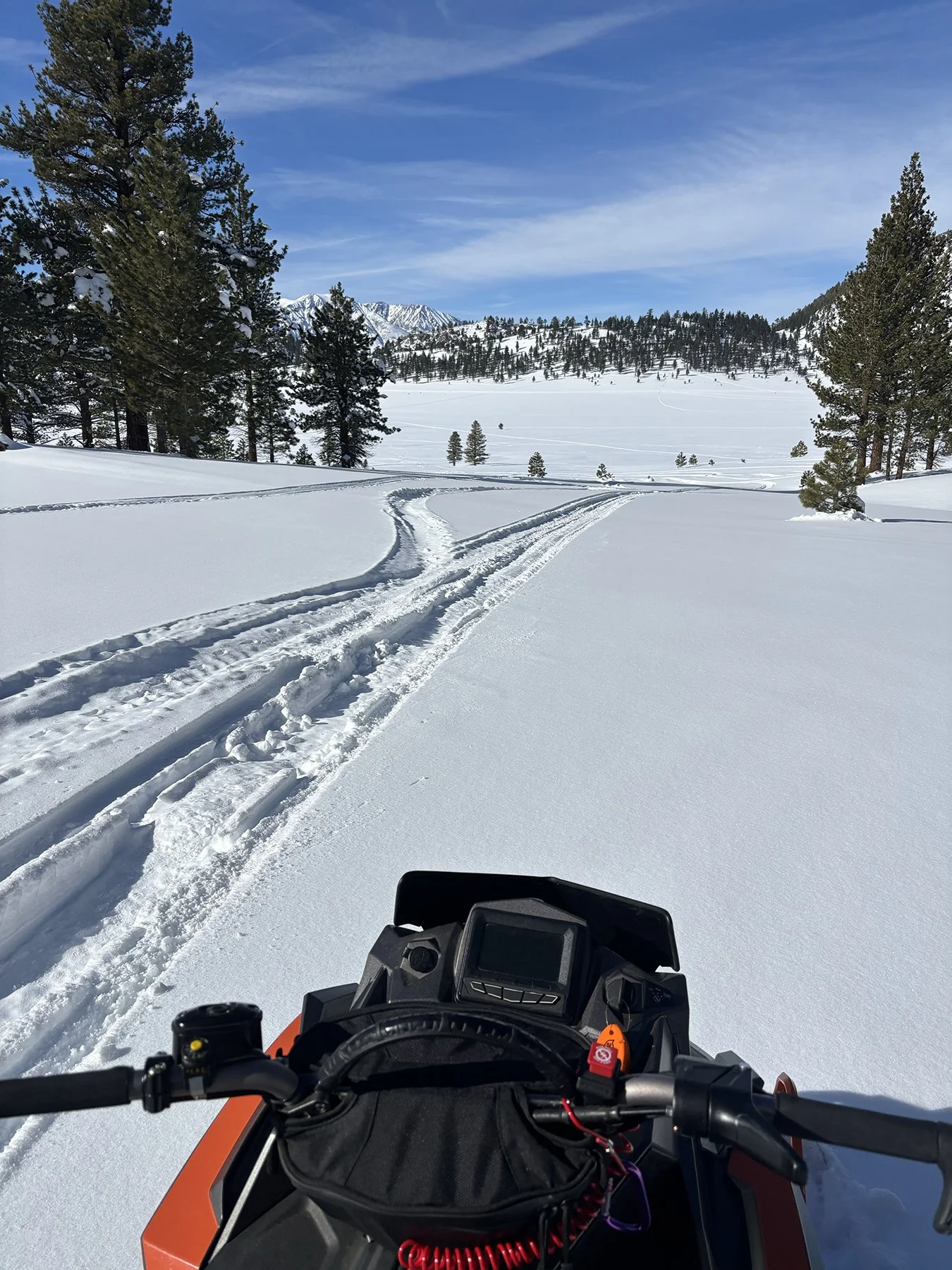
The valley where the horses were trapped, reached by snowmobile through five feet of snow.
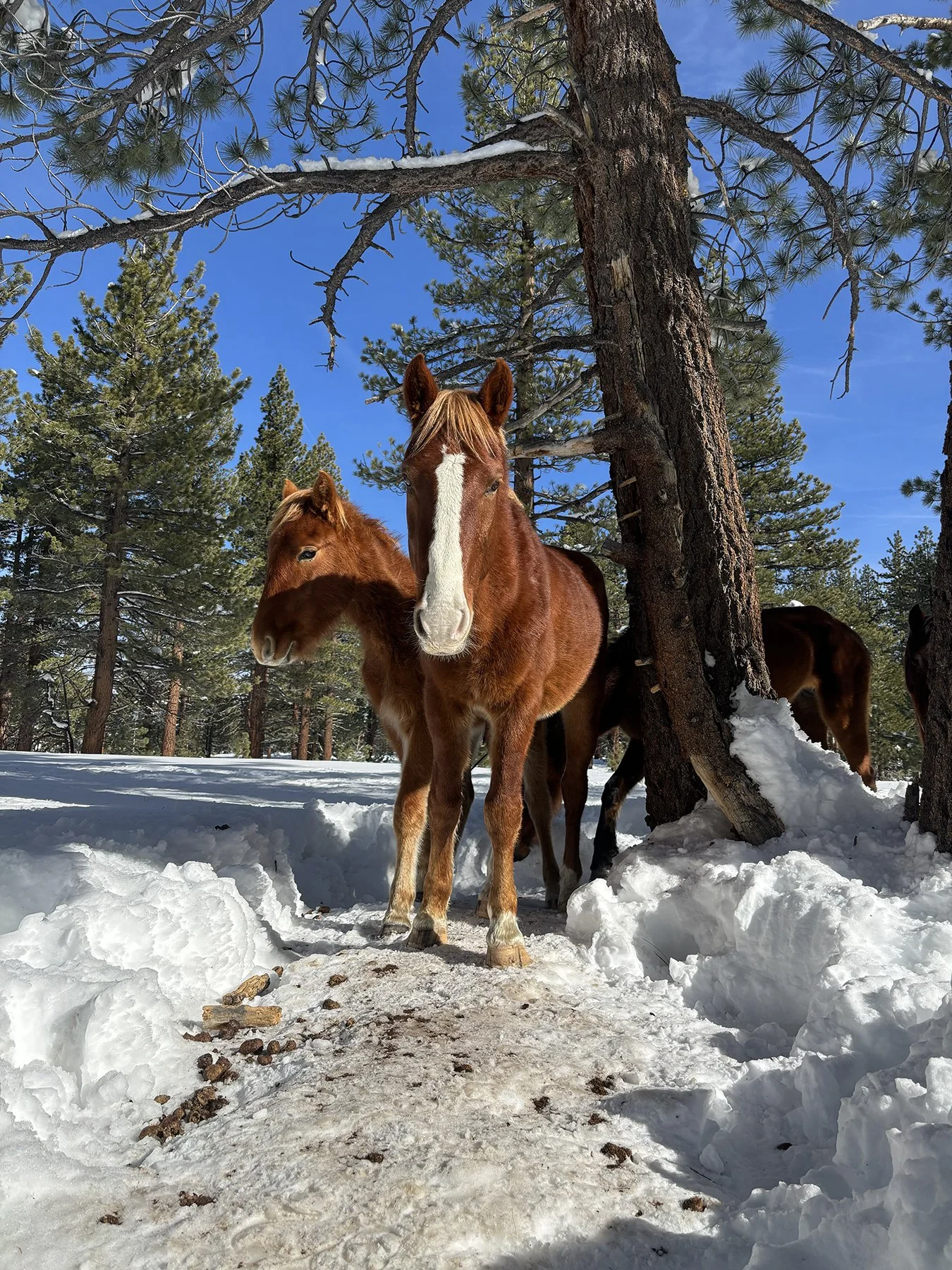
The horses confined to a small packed-down path, with nowhere left to go.
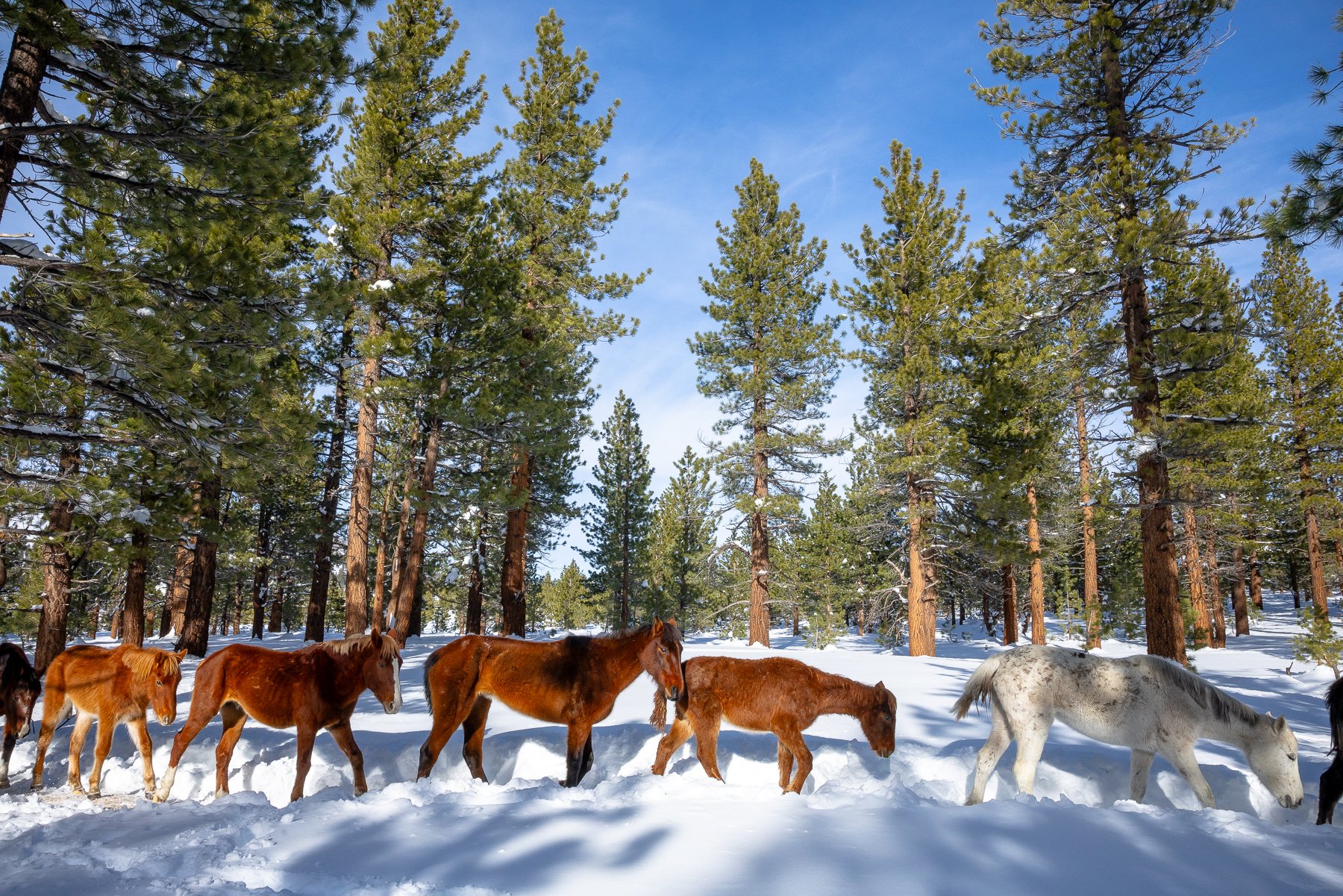
A single packed-down track connecting the only two areas the horses had been able to clear.
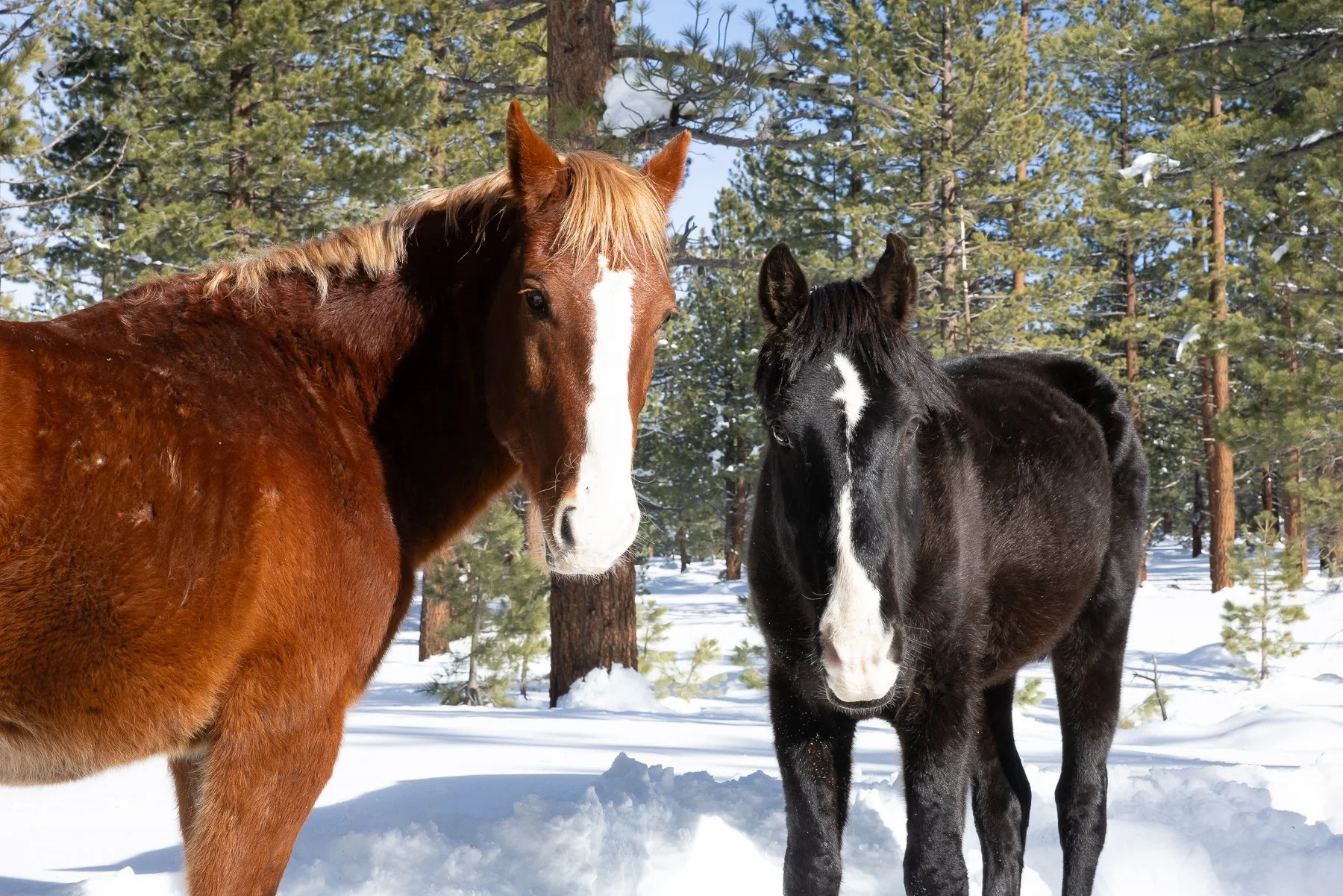
Two of the horses euthanized in Bishop by the Forest Service after rescue.